Ceilings Are the Hardest Easy Paint Job in the House
Everyone underestimates ceiling painting until they have done one. Working overhead is slow and physical; roller spatter finds everything you own; lap marks and holidays hide until the afternoon sun rakes across the surface and announces them permanently. In the quad-cities the stakes are a little higher still, because mountain light is brutal on sloppy ceiling work — low winter sun angles through big view windows turn every missed spot and roller edge into a shadow line you will stare at from the couch.
Professional ceiling painting solves all of it at once: full masking, the right nap and equipment for your texture, wet-edge technique that leaves no laps, and cut-in lines at the wall junction sharp enough to make the whole room look newly built. It is the least expensive service on this site and arguably the most visible per dollar.
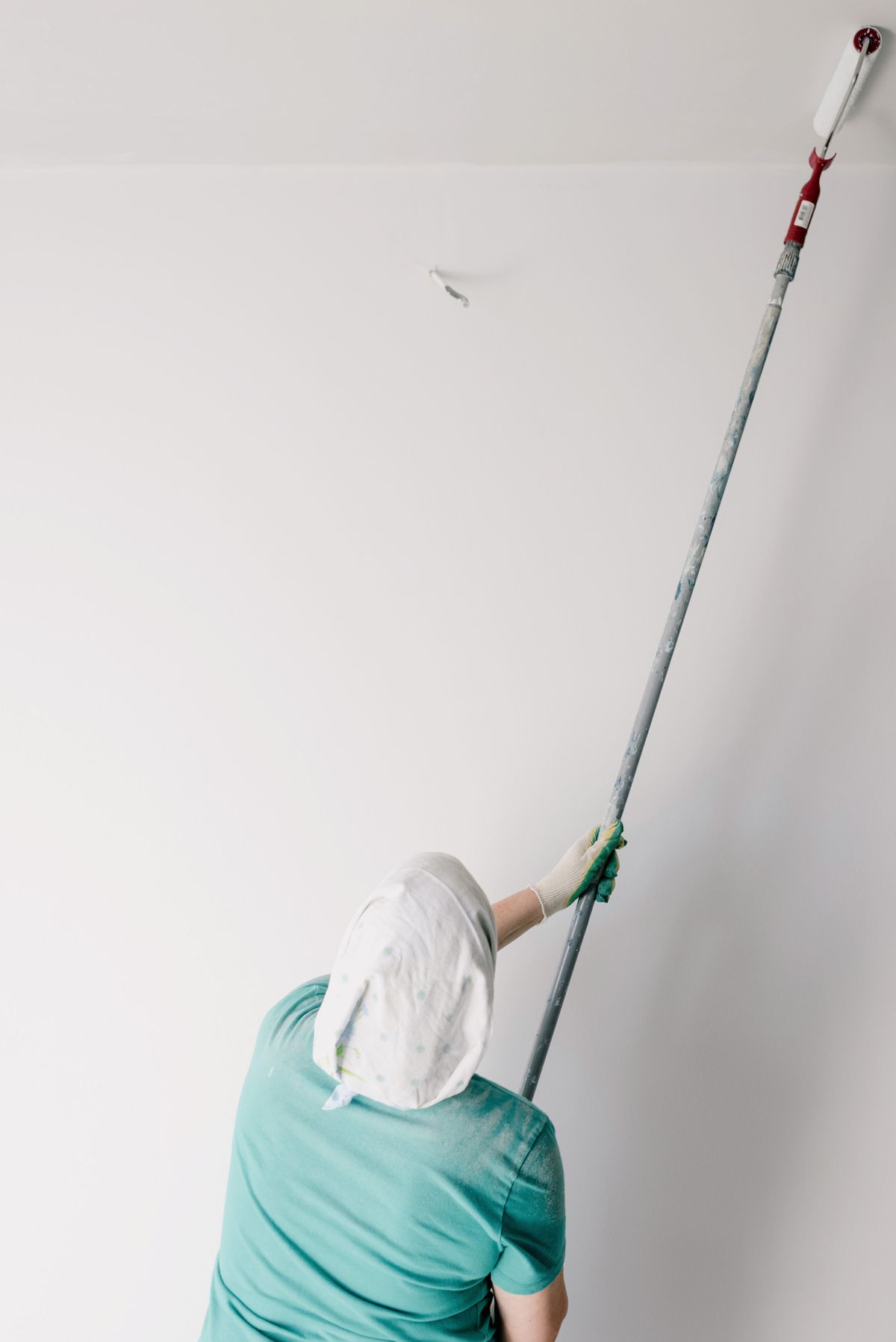
Primer Is the Whole Ballgame Up Here
Two quad-cities realities make primer selection matter more than paint selection. First, wood smoke: months of stove and fireplace heating deposit a fine amber film on ceilings, and ordinary latex paint will not hold it back — the discoloration ghosts through within a season. Stain-blocking primer locks it down permanently. Second, old water stains: snowmelt rings and monsoon leak marks are tannin-loaded and bleed through standard paint the same way. Seal first, then paint — in that order, every time.
Fresh drywall work needs primer for a different reason: new joint compound absorbs paint at a different rate than surrounding board, and unprimed patches "flash" as dull spots. Every retexture or repair that gets painted here gets primed here.
What Goes Into a Professional Ceiling Paint Job
Masking and protection
Floors, walls, trim, fans, and fixtures are covered completely. Spatter is not an "oops," it is a certainty — the difference is whether plastic catches it.
Surface prep
Dust and cobwebs come off, stains get identified and sealed with the right blocker, hairline cracks are caulked or touched up, and slick spots are scuffed for adhesion.
Prime where it counts
Full-prime for new compound, smoke film, or color changes; spot-prime for isolated stains on otherwise sound paint.
Two finish coats, flat sheen
Flat ceiling paint hides surface texture variation and kills glare; two coats give uniform coverage. Dry mountain air shortens recoat windows, so most rooms finish in a single visit.
Crisp cut-ins and cleanup
The ceiling-wall line is cut sharp (or the crown molding edged cleanly), masking comes down, and furniture goes back where it lived.
When Painting Pairs With Other Ceiling Work
Painting is the natural closer for every service on this site. After popcorn removal the ceiling is new compound end to end and must be primed and coated regardless, so bundling paint into the project costs little beyond materials. After a repair, painting corner to corner — rather than dabbing at the patch — is what makes the fix truly invisible, since even same-can touch-ups flash against aged paint.
Color: Whites Are Not All the Same at 5,400 Feet
Flat white remains the default for good reason — it maximizes the bounce from Prescott's 270-plus sunny days and makes eight-foot ceilings feel taller. But "white" spans warm to icy, and the elevation light here is cool and blue-leaning at midday. Homes heavy on wood, leather, and stone often look best under a softened warm white that keeps the ceiling from going stark; crisp modern remodels can carry a cleaner bright white. A slightly warmer ceiling white also flatters rooms lit by evening fires. Sample swatches viewed at morning and dusk settle it quickly — and painting the ceiling a shade or two lighter than the walls almost always reads as "bigger room."
Ceiling Painting Questions
Can I just paint over my popcorn ceiling instead of removing it?
You can, with a thick-nap roller or sprayer — but know what you are buying. Paint freshens the color while making future removal harder and more expensive, because sealed texture resists the water that wet-scraping depends on. If removal is anywhere in the home's future, do it before the ceiling gets its next coat. And on pre-1989 homes, even painting-prep sanding counts as disturbance — test first.
What sheen should a ceiling be?
Flat, almost always. Any sheen amplifies texture variation and throws glare under raking mountain light; flat hides both. The exceptions are kitchens and baths, where a matte scrubbable formulation adds cleanability without going shiny.
How often do ceilings need repainting up here?
A quality flat ceiling coat lasts a decade or more in most rooms. Wood-heated homes shorten that cycle — smoke film accumulates season by season — which is exactly why the stain-blocking primer step matters: it turns the next repaint into a simple recoat instead of another sealing project.
Priced by the Room, Quoted Free
Standalone ceiling painting typically runs $1–$2.50 per square foot depending on height, texture, and how much stain-sealing is involved — a standard bedroom often lands between $150 and $400. Bundled after popcorn removal or retexturing it is cheaper still, since masking and prep are already done. Call or send the quote form with your room count, and you will have a number the same day — free, as always.
Finish the Job With a Flawless Coat
Free ceiling painting quotes across Prescott, Prescott Valley, Chino Valley, and Dewey-Humboldt.